
Auschwitz Tour from Krakow
Visit one of the largest and most infamous Nazi concentration camps on this half-day Auschwitz tour from Krakow.
Tickets Options
Auschwitz Birkenau Museum Tour from Krakow with Pick up from Meeting Point
Prices from
Adult

Auschwitz Birkenau Museum Tour from Krakow - With pick up from meeting point
Who's going?
Ooops! It looks like we're having trouble creating your order.
Please refresh the page and try again!
If this error persists, call us on 0344 873 0070
Payment methods

Reviews
Ooops! It looks like we're having trouble creating your order.
Please refresh the page and try again!
If this error persists, call us on 0344 873 0070
Why buy from us?

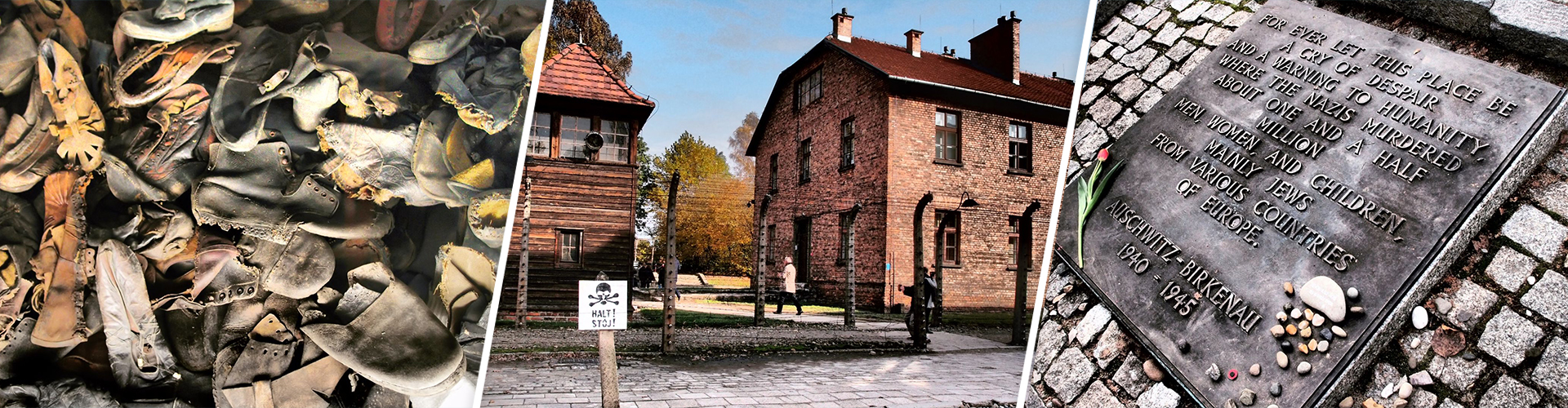
In 1939, after the invasion of Poland by Nazi Germany and the loss of the defensive war by the Polish army, all the western regions of Poland, including the town of Oświęcim, werenannexed by the Third Reich. The town was renamed as Auschwitz and the same name was given to a complex of concentration and extermination camps that were built there. The history of the Auschwitz concentration camp can be divided into two primary periods: the years 1940-1942, when it functioned as a concentration camp and a place of slow extermination, and the years 1942-1944, when it was transformed into the biggest centre of immediate mass extermination of Jews, who had been transported into the camp under the policy conducted by the Third Reich that assumed the extermination of the entire Jewish population in Europe. It is estimated that over 1.1 million women, men and children died in the camp during these four years. Around 90% of casualties were Jews brought there from all the European countries that were occupied by Germany or situated in the zone of German influence. Most of them were put to death in gas chambers and others were victims of brutal punishments, medical experiments or inhumane living conditions in the camp.
A visit to the Auschwitz Museum allows you to learn about the cruel fate of these people and to broaden your historical knowledge of the Holocaust. A trip to the Auschwitz-Birkenau Museum is a specific encounter with the history of Nazi cruelty and the fate of the Holocaust victims, which is the saddest in the history of humanity. During the tour, tourists will see a permanent exhibition, original camp buildings in the main part of the complex (Auschwitz) and the most important sites in Brzezinka (Birkenau). Konzentrationslager (KL) Auschwitz was established as a result of Nazi policy conducted in the territory of occupies Poland in order to destroy the Polish state by means of mass deportations and systematic extermination. The KL Auschwitz camp was the largest Nazi concentration camp and extermination centre, so we ask that you to maintain due respect to the memory of the victims. During the tour, the group will be accompanied by an experienced museum guide who will tell tourists step by step about the sad fate of the camp victims. The entire sightseeing tour, including travel, will last around 7-8 hours – the visit to the first part of the Museum will take 2 hours, and the visit to Birkenau will take around 1 hour. Please remember that the programme of the trip does not include any lunch break. Because the camp is situated on an extensive open space, please remember to take clothes that will give you adequate protection against the prevailing weather conditions.
· Auschwitz I Main Camp
· Auschwitz II Birkenau CampBecause of the need to preserve the historical authenticity of the site of the Memorial it may be difficult for dissabled persons to move around the grounds and buildings. Due to the character of historical paving of roads and sidewalks within former Auschwitz I and Auschwitz II Birkenau camps, persons with movement disabilities need someone else’s assistance in the majority of cases.
The access to historical buildings hosting the exhibitions is limited due to the fact that within the blocks, their ground floor level is ca. 70cm above the level of the adjacent area, while historical external stairs limit the possibility to install permanent elements (ramps, lifts) facilitating the access for people with movement disabilities. Persons moving on wheelchairs need someone else’s assistance in order to reach the ground floor. Upper levels of the blocks are not accessible for persons moving on wheelchairs.
Due to the facts listed above the Regular Tour that is offered is not wheelchair accessible.
All customers with special needs are kindly asked to inquire about a private tour availability.
- Visit the Auschwitz-Birkenau complex, the largest of the Nazi concentration camps
- Tour the permanent exhibitions and buildings at the Auschwitz I-Main Camp and the most
- important original camp buildings in Auschwitz II-Birkenau
- Licensed Professional Guide service included
- Avoid the queues with a skip-the-line ticket
- Roundtrip transportation from Krakow included
- Expert tour guide
- Return (round-trip) transportation from Krakow
- Pick up from Meeting Point
- Skip the Line Access
- Entrance ticket
- Headsets when appropriate at Auschwitz I Main Camp
- Visit to the most important parts of Auschwitz I Main Camp and Auschwitz II Birkenau
- Camp
- Short breaks (10 – 20 minutes)
- Gratuities
- Food/Beverage
Our designated meeting location is the COACH STOP adjacent to Krakow Main Post Office, located at Ul. Wielopole 2. Upon confirming your tour with our supplier, they may suggest an alternative pick-up point that is more convenient for you. We recommend reconfirming your arrangements promptly upon receiving your ticket.
• Entrance may be refused if the name provided on the booking is not identical to the name on the ID provided when entering
• Departure time might differ from the time listed. The exact pickup time will be confirmed up to 1 day prior to the tour date
• It is the responsibility of all visitors to be at the meeting point at confirmed meeting time. Guests arriving after departure cannot be accommodated & missed tours or tickets cannot be refunded.
• For help with meeting point or other urgent issues, please phone +48 506 379 678.
• The guided tour of Auschwitz Birkenau State Museum is approximately 3.5 hours long and is conducted according to Auschwitz Birkenau State Museum Rules and Regulations
• It is recommended to take a packed lunch from Krakow to consume during a short break between both campsStudent 13-25 years old with Valid Student IDAll customers with special needs are kindly asked to inquire about a private tour availability.
Auschwitz Birkenau Museum Tour from Krakow with Pick up from Selected Hotels
Prices from
Adult
Auschwitz Birkenau Museum Tour from Krakow with Pick up from Selected Hotels
Who's going?
Ooops! It looks like we're having trouble creating your order.
Please refresh the page and try again!
If this error persists, call us on 0344 873 0070
Payment methods
Reviews
Ooops! It looks like we're having trouble creating your order.
Please refresh the page and try again!
If this error persists, call us on 0344 873 0070
Why buy from us?
In 1939, after the invasion of Poland by Nazi Germany and the loss of the defensive war by the Polish army, all the western regions of Poland, including the town of Oświęcim, were annexed by the Third Reich. The town was renamed as Auschwitz and the same name was given to a complex of concentration and extermination camps that were built there. The history of the Auschwitz concentration camp can be divided into two primary periods: the years 1940-1942, when it functioned as a concentration camp and a place of slow extermination, and the years 1942-1944, when it was transformed into the biggest centre of immediate mass extermination of Jews, who had been transported into the camp under the policy conducted by the Third Reich that assumed the extermination of the entire Jewish population in Europe. It is estimated that over 1.1 million women, men and children died in the camp during these four years. Around 90% of casualties were Jews brought there from all the European countries that were occupied by Germany or situated in the zone of German influence. Most of them were put to death in gas chambers and others were victims of brutal punishments, medical experiments or inhumane living conditions in the camp. A visit to the Auschwitz Museum allows you to learn about the cruel fate of these people and to broaden your historical knowledge of the Holocaust.
A trip to the Auschwitz-Birkenau Museum is a specific encounter with the history of Nazi cruelty and the fate of the Holocaust victims, which is the saddest in the history of humanity. During the tour, tourists will see a permanent exhibition, original camp buildings in the main part of the complex (Auschwitz) and the most important sites in Brzezinka (Birkenau). Konzentrationslager (KL) Auschwitz was established as a result of Nazi policy conducted in the territory of occupies Poland in order to destroy the Polish state by means of mass deportations and systematic extermination. The KL Auschwitz camp was the largest Nazi concentration camp and extermination centre, so we ask that you to maintain due respect to the memory of the victims. During the tour, the group will be accompanied by an experienced museum guide who will tell tourists step by step about the sad fate of the camp victims.The entire sightseeing tour, including travel, will last around 7-8 hours – the visit to the first part of the Museum will take 2 hours, and the visit to Birkenau will take around 1 hour. Please remember that the programme of the trip does not include any lunch break. Because the camp is situated on an extensive open space, please remember to take clothes that will give you adequate protection against the prevailing weather conditions.
· Auschwitz I Main Camp
· Auschwitz II Birkenau Camp
DoubleTree by Hilton Kraków Hotel & Convention Center, ul. Dąbska 5, 31-572 Kraków
Vienna House Easy Cracow, ul. Przy Rondzie 2, 31-547 Kraków
Ibis Styles Kraków Centrum, ul. Mogilska 53, 31-545 Kraków
Radisson RED Hotel & Radisson RED Apartments, ul. Aleksandra Lubomirskiego 16, 31-509 Kraków
Aparthotel Lwowska 1, ul. Lwowska 1, 30-548 Kraków
Qubus Hotel, ul. Nadwiślańska 6, 30-527 Kraków
Mercure Krakow Fabryczna City, ul. Fabryczna 13, 31-553 Kraków
Galaxy Hotel, ul. Gęsia 22A, 31-535 Kraków
K+R Starowiślna 65, ul. Starowiślna 65, 31-052 Kraków
CENTRAL MEETING POINT: COACH STOP Next To Krakow Main Post Office At Ul. Wielopole 2, ul. Wielopole 2, 31-072 Kraków
Leonardo Boutique Hotel Krakow Old Town, ul. Świętej Gertrudy 12, 31-048 Kraków
Kiss & Ride bus bay on Pawia 18a, across the street from Mercure Hotel, ul. Pawia 18a, 31-154 Kraków
Ibis Kraków Stare Miasto, ul. Pawia 15, 31-154 Kraków
Avena by Artery, ul. Długa 80, 31-147 Kraków
Art & Garden Residence, ul. Krowoderska 71, 31-158 Kraków
Teatr Groteska, ul. Skarbowa 2, 31-121 Kraków
Premium Hostel, ul. Pomorska 2, 30-039 Kraków
K+R Straszewskiego 14, ul. Floriana Straszewskiego 14, 31-101 Kraków
Sheraton Grand Krakow, ul. Powiśle 7, 31-101 Kraków
AC Hotel by Marriott Krakow, al. 3 Maja 51, 30-062 Kraków
No.23 Premium Aparthotel, Marszałka Józefa Piłsudskiego 23, 31-110 Kraków
Novotel Kraków City West, al. Armii Krajowej 11, 30-150 KrakówBecause of the need to preserve the historical authenticity of the site of the Memorial it may be difficult for disabled persons to move around the grounds and buildings. Due to the character of historical paving of roads and sidewalks within former Auschwitz I and Auschwitz II Birkenau camps, persons with movement disabilities need someone else’s assistance in the majority of cases.
The access to historical buildings hosting the exhibitions is limited due to the fact that within the blocks, their ground floor level is ca. 70cm above the level of the adjacent area, while historical external stairs limit the possibility to install permanent elements (ramps, lifts) facilitating the access for people with movement disabilities. Persons moving on wheelchairs need someone else’s assistance in order to reach the ground floor. Upper levels of the blocks are not accessible for persons moving on wheelchairs.
Due to the facts listed above the Regular Tour that is offered is not wheelchair accessible.
All customers with special needs are kindly asked to inquire about a private tour availability.
- Visit the Auschwitz-Birkenau complex, the largest of the Nazi concentration camps
- Tour the permanent exhibitions and buildings at the Auschwitz I-Main Camp and the most
- important original camp buildings in Auschwitz II-Birkenau
- Licensed Professional Guide service included
- Avoid the queues with a skip-the-line ticket
- Roundtrip transportation from Krakow included
- Expert tour guide
- Return (round-trip) transportation from Krakow
- Pick up from Selected Hotels in Krakow City Center
- Skip the Line Access
- Entrance ticket
- Headsets when appropriate at Auschwitz I Main Camp
- Visit to the most important parts of Auschwitz I Main Camp and Auschwitz II Birkenau
- Camp
- Short breaks (10 – 20 minutes)
- Gratuities
- Food/Beverage
Your booking is on request and will be confirmed within 48 working hours. If we are unable to fulfil your dates, we will contact you within this period with an alternative date. If you do not hear from us within 48 working hours, your booking will be confirmed for the date you have requested. Please refrain from booking flights/accommodation until your booking is confirmed.
•As per the requirements of Auschwitz-Birkenau Memorial and Museum, all participants must provide their full name and contact details as part of the booking. Entrance may be refused if the name provided on the booking is not identical to the name on the ID provided when entering.
•Pick-up is possible from the hotels located in the center of Cracow. If your hotel location is in an area beyond this or in an area with limited traffic/accessibility, then you will be picked up from the nearest possible pickup place. The exact location/pickup time will be provided to you (as long as you RECONFIRM) at least a day before your scheduled tour
•Departure time might differ from the time listed. The exact pickup time and pick up point will be confirmed up to 1day prior to the tour date
•Luggage is not permitted in the camp with the exception of hand baggage. Hand baggage is considered to be luggage with maximum dimensions of 30cm x 20cm x 10cm. In order to enter the museum, it is requested that no luggage should be brought to the camp with exception of water bottles and personal belongings not exceeding the size of a wallet/purse.
•It is the responsibility of all visitors to be at the meeting point at confirmed meeting time. Guests arriving after departure cannot be accommodated & missed tours or tickets cannot be refunded.
•The guided tour of Auschwitz Birkenau State Museum is approximately 3.5 hours long
•It is recommended to take a packed lunch from Krakow to consume during a short break between both camps
All customers with special needs are requested to reserve a private tour.
Auschwitz Tour from Krakow
Tours include round-trip transport from selected Krakow hotels.
As you travel from Krakow to Auschwitz, you’ll be shown a short documentary to learn about the history of the camp, as well as the Holocaust itself, in preparation for your visit.
The tour begins with a visit to the Auschwitz-Birkenau Museum, a memorial dedicated to the millions of people who were killed here during World War II; not only Jews but Poles, Roma and many others.
As well as many thought-provoking exhibits, the museum is comprised of the Auschwitz I concentration camp and Auschwitz II extermination camp. As you explore the preserved grounds you’ll see the ruins of the gas chambers and crematoria filled with human ashes.
The tour is led by an expert guide, who will give you further insight on the atrocities that went on here, as well as explaining the history of the Holocaust.
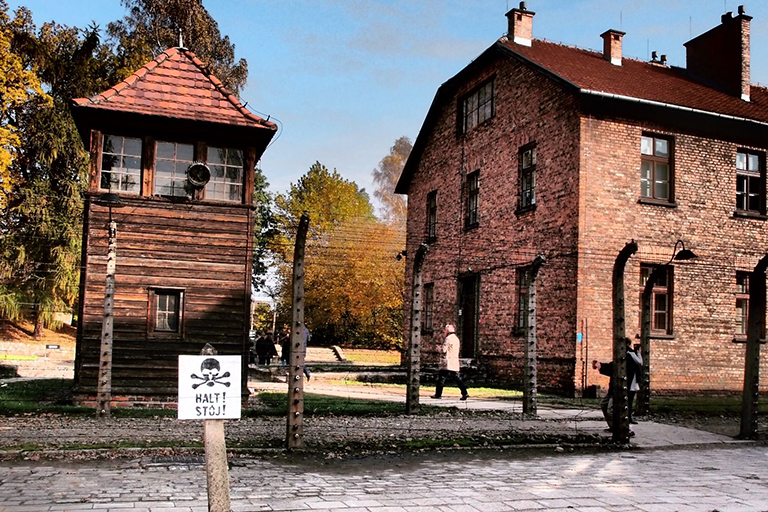
They’ll relate poignant stories of life for prisoners here, while showing you the original roads, fences, watchtowers and railways around the camps.
Availability:
Morning Tour: Daily all year round (except some holidays)
Type of Tour:
Guided tour of the Auschwitz-Birkenau concentration camps and memorial museum, with transport from Krakow by air-conditioned bus
Duration:
Please allow approx. 5½ hours for this tour from the time the coach departs Krakow as it is a 1 hour drive each way
Pick-up points & times (Morning tour):
Pick-up is included from the following hotels & locations in Krakow:
- 8.15am: Sympozjum Hotel (available on request only)
- 8 – 8.30am: Best Western Hotel, Conrad Hotel Crown Piast, Demel Hotel, Best Western Effect Express, Fortuna Bis Hotel, Novotel Bronowice, Petrus Hotel, Orient Hotel (available on request only)
- 8.40am: 2 Matejki Square, 7 Szczepanski Square, Galaxy Hotel
- 8.45am: Alexander I Hotel, Andel’s Hotel, Ester Hotel
- 8.50am: Globus Hotel, Logos Hotel, Wyspianski Hotel
- 8.55am: Holiday Inn, Novotel Centrum/Ibis Centrum, Queen Boutique Hotel
- 9am: Royal Hotel
- 9.05am: Radisson Blu Hotel
- 9.10am: Sheraton Hotel
Guide:
An English-speaking professional guide will accompany you on this tour
Age Restrictions:
This tour is not recommended for children under 14.
Disability Access:
This tour includes a lot of walking, so is not recommended for people with limited mobility or those confined to a wheelchair
What to wear:
As this is a walking tour we recommend to wear comfortable clothes and shoes
Included:
Return transport, admission to the Auschwitz-Birkenau Memorial Museum
Not Included:
Food & drinks
Reviews
£49
£39
Why buy from us?
- The lowest prices
- No credit card fees
- Receive your tickets via e-mail

Never miss out again
Pre-booked tickets are usually cheaper than at the entrance
Follow Us



0344 873 0070
Mon – Fri: 10am – 5pm, Sat – Sun: Closed
Most Popular Tickets
About Us
Additional
© Attraction World 2026
Normal opening times:
Mon – Fri: 10am – 4pm
Sat, Sun: Closed